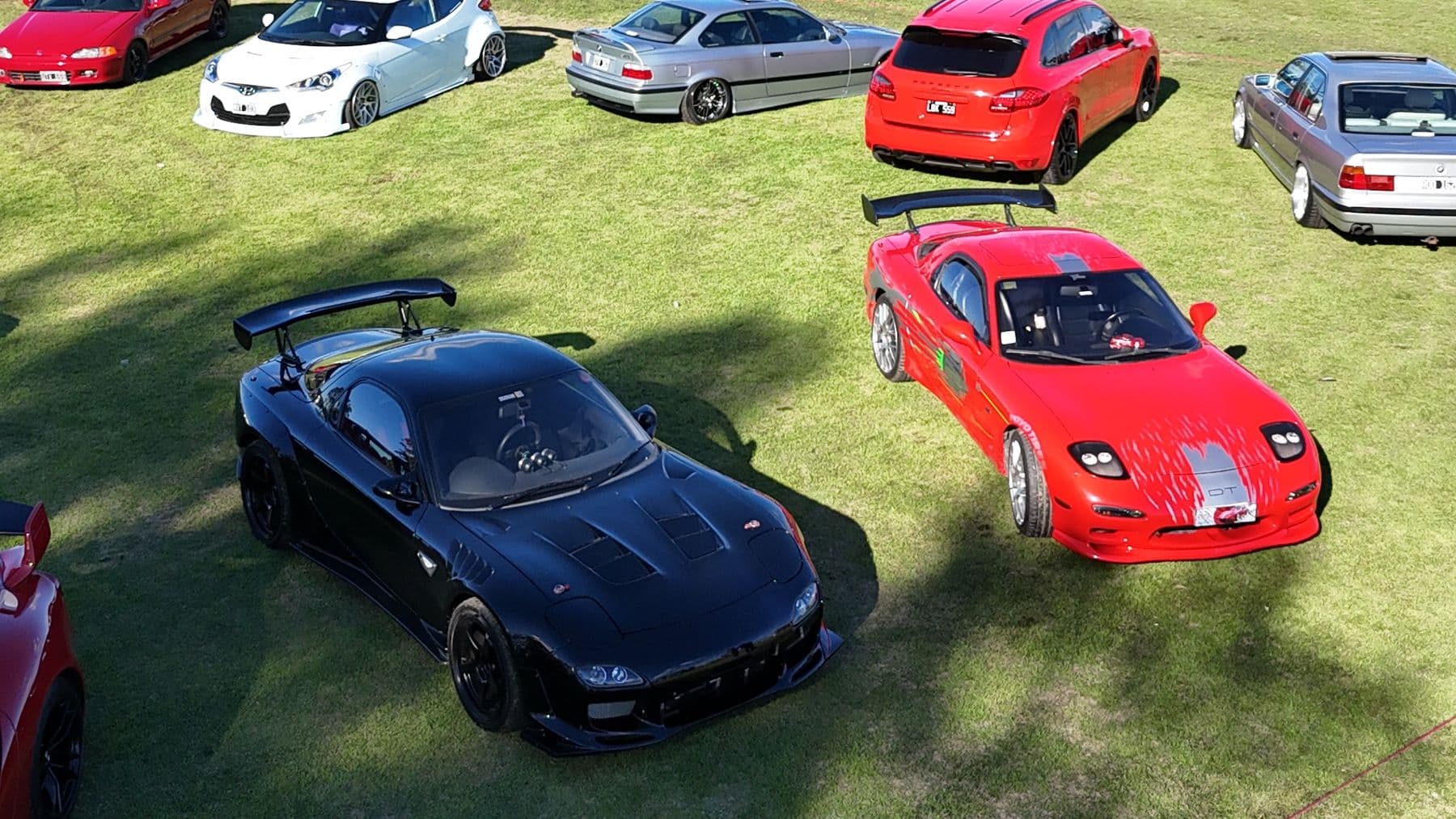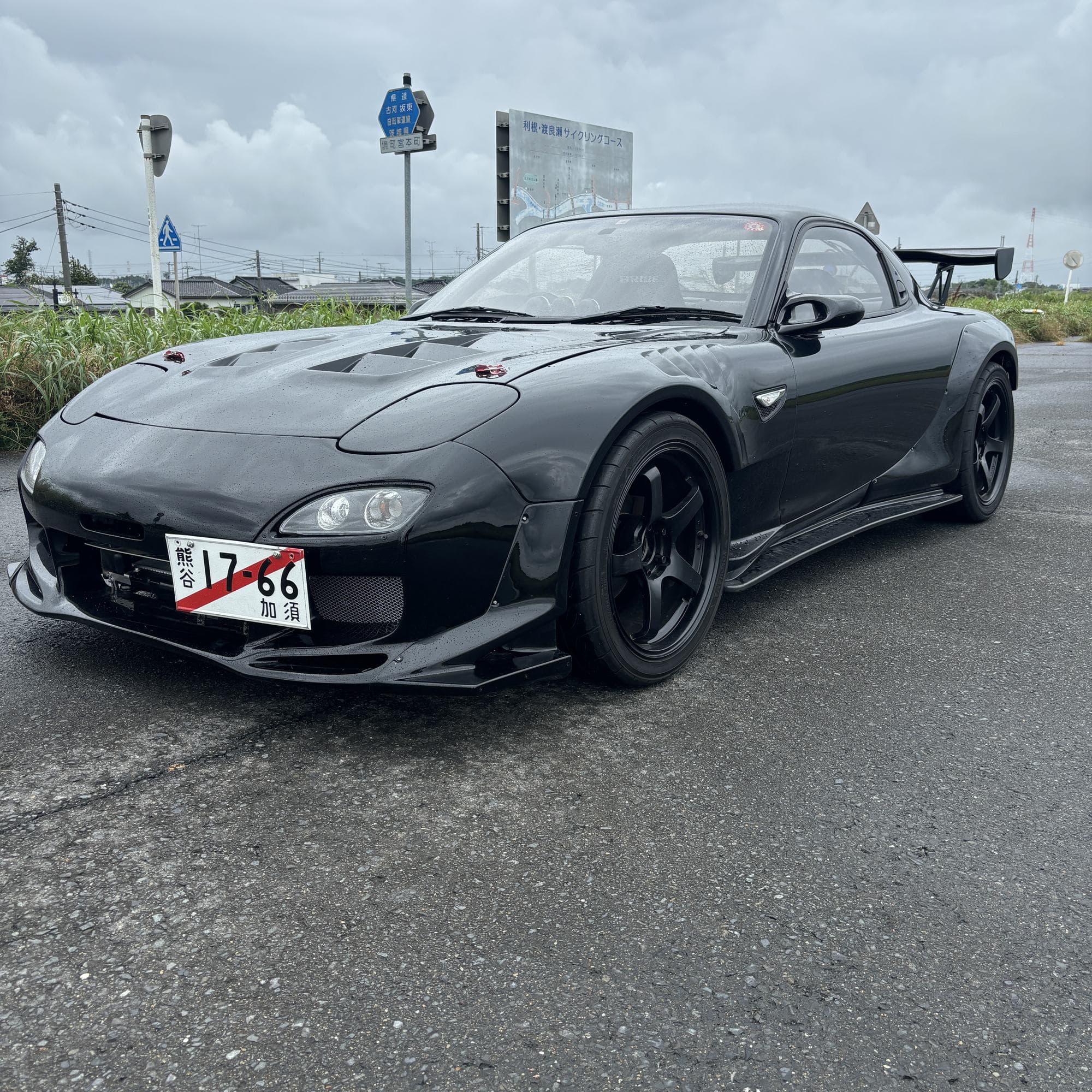
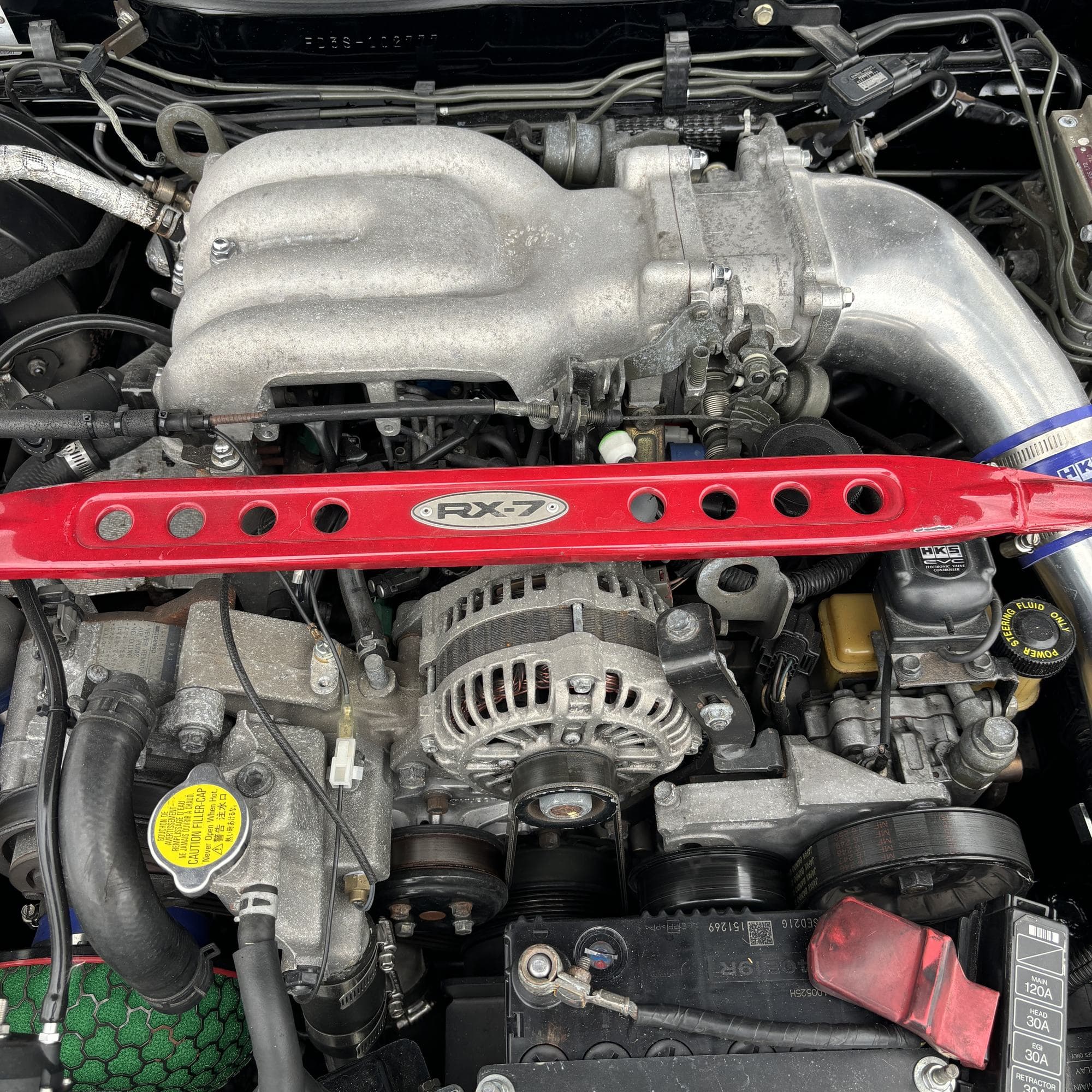
The heart of the FD is the 13B-REW: two 654 cc rotors and a way of delivering power that's nothing like any piston engine.
From the factory, the REW came with a sequential twin-turbo setup as clever as it was fragile. Mine came from Japan already down the path most tuners choose: a single HKS GT3-4R turbo and an HKS F-CON V-Pro 3.4 running the show. Less complexity, more reliability and a powerband that keeps pulling when pistons are already begging for mercy.
Why it's special
A rotary has no valves, no connecting rods and no conventional crankshaft. The rotor spins inside an oval-shaped chamber (the epitrochoid, to its friends) and completes all four phases of the cycle in a single turn. The result:
- Absolute smoothness: nothing goes back and forth, everything spins.
- Endless revs: the redline is so high it feels unreal.
- Compactness: the engine fits under a ping-pong table.
Porting and overlap: where the brap brap brap comes from
With no valves, the rotor itself opens and closes the way in and out: as its edge sweeps over a port (a hole in the housing), it uncovers or covers it. On the 13B-REW the intake comes in through the sides (side ports, in the end housings) and the exhaust leaves through the periphery of the rotor housing.
Porting means enlarging or reshaping those ports so they open earlier, close later or flow more air. It's the rotary equivalent of fitting a wilder camshaft to a piston engine. There are three classic levels:
- Street port: the factory intake ports are enlarged and smoothed. More air up top without changing the engine's character too much.
- Bridge port: a second opening is cut next to the original port, leaving a metal "bridge" in between so the apex seal doesn't catch as it passes. The intake opens much earlier.
- Peripheral port (P-port): the intake moves to the periphery of the housing, just like the exhaust. Maximum flow and maximum character; this is race territory.
Overlap is the moment when the same rotor face has the exhaust port and the intake port open at the same time. The animated cutaway on the home page shows it well: both ports sit on the left side, and as a face sweeps through that area it's facing both at once.
From the factory, the 13B-REW has little overlap and a fairly even idle. With a bridge port or a P-port, overlap grows a lot. At high revs that's a good thing: the outgoing exhaust "pulls" the fresh charge in and the chamber fills better. At idle the gas moves slowly and the opposite happens: some exhaust flows back into the intake and dilutes the fresh charge. Some combustion events come out strong, others weak, and the engine runs uneven. That choppy rhythm is the brap brap brap.
It isn't free: more overlap means less low-end torque, more fuel use, an idle that needs attention and a finer tune, especially with a turbo. That's why porting on this FD is under evaluation for the next rebuild, not a done deal.
What it needs
The 13B isn't fragile: it's demanding. The difference matters.
- Temperatures: enemy number one. Radiator and cooling system in perfect shape, always.
- Oil: a rotary burns oil by design (it lubricates the apex seals). Checking the dipstick is part of driving one.
- Warm up before pushing: turbo + cold rotary = bad combo. Always a few minutes of patience.
- Compression: the engine's health check. It's measured with a rotary compression tester and tells the full story of each chamber.
The reputation
Yes, apex seals wear out. Yes, a rebuild comes eventually. But a properly maintained 13B is a reliable engine — and when it's spinning at 8,000 rpm, no theoretical debate matters much.
Next post in this series: the checklist I run before every drive.